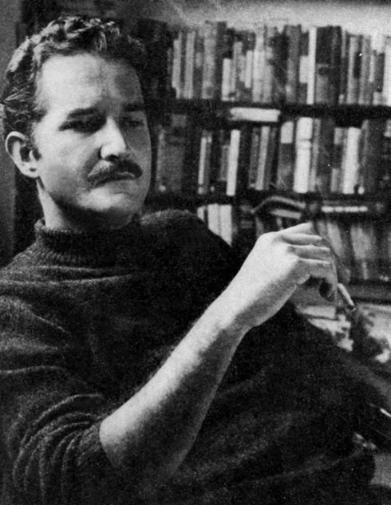
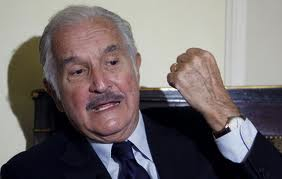
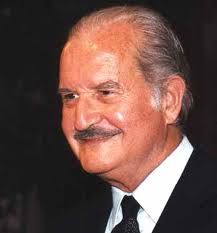
Carlos Fuentes was born on November 11, 1928 in Panama City,
Panama, where his father was posted as a member of Mexico's diplomatic
corps. The family would soon relocate to Washington D.C., where the
father served as legal counsel of the Mexican embassy. Carlos Fuentes
received much of his primary education in the public schools of
Washington, D.C. While his American classmates enjoyed their summer
vacation, he returned to Mexico, to stay with his grandparents and
attend Mexican schools. From his grandmothers, he absorbed Mexican
history and folklore, while in Washington he was immersed in American
popular culture. He followed the international politics of the turbulent
pre-war era through the dinner table conversation of his diplomat
father, his family and friends.
A particularly dramatic moment came in 1938, when Mexico's President
Lázaro Cárdenas decreed that the country's foreign-controlled oil fields
would be nationalized and the country's oil industry placed in the
hands of a state monopoly, Pemex. American industrialists with interests
in Mexico were outraged. They demanded that President Franklin
Roosevelt intervene, with military force if necessary, as previous U.S.
governments had done when Latin American governments had threatened U.S.
business interests. Roosevelt refused, and negotiated a settlement,
respecting Mexico's sovereignty while ensuring that private interests
were compensated. This turning point in U.S.-Mexico relations made a
strong impression on the young Carlos Fuentes, who was impressed with
Roosevelt's diplomacy in reconciling the opposing parties. At the same
time, Fuentes was made newly aware of his own identity as a Mexican in a
foreign country.
During the years that followed, the Fuentes family would be assigned to
duty in Chile, Argentina and elsewhere in South America. Carlos Fuentes,
adapting to each new environment, acquired a respect for the
differences between countries while developing a powerful sense of the
shared heritage of the Latin nations. An enthusiastic reader, he
resolved at an early age to become a writer, but at his parents'
insistence, he pursued the study of law, first at the National
University of Mexico and then at the Graduate Institute of International
Studies in Geneva, Switzerland. Like his father before him, he entered
the diplomatic service and served as Director of International Cultural
Relations for the Ministry of Exterior Relations.
While fulfilling his government duties, he pursued a literary career in his spare time. With the success of his novel, Where the Air is Clear, Carlos Fuentes could afford to leave the foreign service and pursue a career as a full-time writer. In 1962 he published The Death of Artemio Cruz,
an epic panorama of Mexican history from the revolution to the present.
This work, inspired in part by the stories his grandmothers had told
him of the revolution and its aftermath, has become an acknowledged
masterpiece of world literature and one of the signature works of el boom,
a period of intense creativity in Latin American fiction, when writers
like Fuentes and his friend, the Colombian novelist Gabriel García
Márquez, captured the imagination of readers around the world.
Fuentes continued to write novels throughout the 1960s and '70s, including The Good Conscience, A Change of Skin, and Aura.
In addition to his fiction, his journalism and political commentary
made Fuentes one of the most recognizable public intellectuals in the
Spanish-speaking world. This visibility also created difficulties. For
many years he was denied a visa to enter the United States, as were many
other prominent European and Latin American intellectuals, presumably
for his criticism of American foreign policy, although no reason was
ever given publicly.
The publication of his 1975 novel Terra Nostra confirmed his
reputation as one the most inventive novelists writing in Spanish or any
other language. The Mexican government recognized his growing
international stature by asking him to return to public service once
more, this time as Ambassador to France, a post he held from 1975 to
1977. After stepping down, he resolved to devote himself entirely to
literature, but the press of current events has often compelled him to
speak out on public issues. In the 1980s, he became one of the world's
most outspoken critics of U.S. policy in Central America; he has also
been vocally critical of Cuban dictator Fidel Castro, for whose
revolution he had once held high hopes.
Fuentes presented a lifetime of reflection on the shared cultural
heritage of the Spanish-speaking countries in a television series, The Buried Mirror. His companion volume for the series proved immensely popular around the world.
Fuentes continued to produce novels, including The Hydra Head and Distant Relations. His novel, The Old Gringo,
concerned the fate of the U.S. writer Ambrose Bierce, who disappeared
in Mexico in 1913 during the revolution. The novel became a best-seller
in the United States in 1985, the first novel by a Mexican author to
achieve this status. A film version, starring Gregory Peck and Jane
Fonda, appeared in 1989. The same year saw the success of Fuentes's
novel Christopher Unborn, a philosophical fantasy told from the
point of view of an unborn child who will enter the world on the 500th
anniversary of the European discovery of America. These were followed by
Diana: The Goddess Who Hunts Alone and The Crystal Frontier. Recent novels include Inez, and The Years with Laura Diaz, another saga of 20th century Mexican history, as seen through one woman's very long life.
Besides the 15 novels he has published to date, Fuentes has produced
books of short stories, essays and political commentary. He writes a
regular column for the Mexico City daily newspaper La Reforma.
With his wife, Mexican television journalist Sylvia Lemus, Fuentes
divides his time between homes in Mexico City and London, England.
Fuentes has one grown daughter by a previous marriage. The two children
of his marriage to Sylvia Lemus died in adulthood of natural causes.
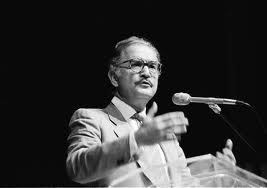
A compelling lecturer and public speaker, Fuentes has served as Simon
Bolivar Professor at Cambridge University in England. After the ban on
his travel to the United States was lifted, he was invited to teach at
numerous American universities as well. He was the first to hold the
Robert F. Kennedy Chair of Latin American Studies at Harvard University,
he has been a visiting professor at Princeton University and is
currently a Professor-at-Large of Hispanic Studies at Brown University.
A collection of essays, This I Believe: A Life From A to Z, received the Prize of the Royal Spanish Academy for Best Book of 2004. The same year, he published Contra Bush, a critique of the U.S. administration. He has continued his meditations on history and public affairs in his recent fiction. The Eagle's Throne (2006) is a mischievous satire of Mexican politics set in the not-too-distant future. His 2011 novel Destiny and Desire
threads a tale of friendship between two old school friends through a
dense tapestry of fantasy, history and mordant reflections on the state
of contemporary Mexico.