"El Boom"
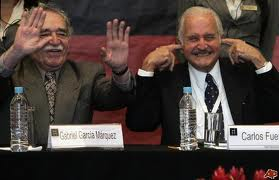 Gabriel Garcia Marquez 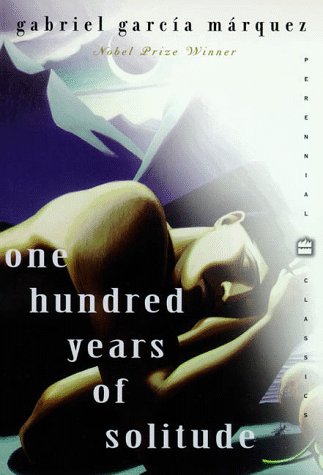 Mario Vargas Llosa 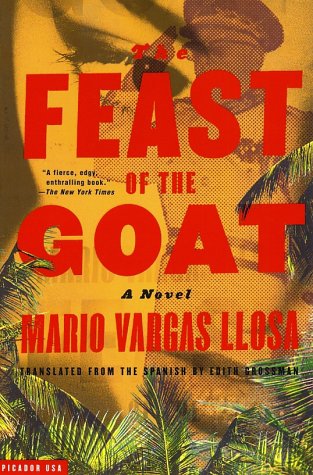 | Between 1960 and 1970, Latin American literature experienced a huge and profound transformation which developed into that period called ‘Boom’ (in allusion to the vigour and importance of the decade). From a peripheral standpoint, Hispanic writers (mainly those specializing in novelistic narrative) were able to grant Central and South American literature the fame and reputation that ultimately put it on a par with Europe and North America. There were many reasons that led these writers to build and conceive literature in such new ways. Among them we find the accelerated progress and expansion of cities, the strengthening of the middle class, the unity and brotherhood of Latin American countries and the fresh innovations in means of communication. The historical context was also of great importance: the Cuban Revolution in 1959 was the epitome of the political turmoil that existed in the region. It was the great event that marked the beginning of the Boom, given that from then on, people from around the world would look at Latin America with different eyes. Moreover, it is the source of the radical and revolutionary tone that surfaced in the texts from that period. During the sixties, Central and South America were regarded as a whole and a shared literature was born. Authors from the different countries constantly exchanged ideas and experiences, even becoming friends. Geographical boundaries were lost and international recognition pertained to the entire portion of the continent. The writers were deeply concerned about the society that surrounded them; therefore the novel triumphed over the other literary genres. This commitment to people and history led to the characterization of the Latin American intellectual, who felt naturally obliged to reflect on paper about the main situations that preoccupied people in the region: exile, dictatorships, civil wars, political revolutions, social fragmentation and even anachronism. All of these themes mainly developed into two different styles: on one hand, we find the ‘historical novel’, which is about the historical progression of a character’s life (especially the ‘dictator novel’ type). In this sub-genre, the figure of the dictator is explored more abstractly, uncovering the nature of the person in relation to the essence of the regime. On the other hand, we have the novel worked through ‘magical realism’: ‘[It] stretches the boundaries of realism in order to stretch the definition of reality. Magic becomes ordinary, “admitted, accepted, and integrated into the rationality and materiality of literary realism.” Artistic innovation brought in the use of vernacular language and layering of different vantage points, while time and linear progress were strongly doubted and challenged. Literature and its message were deeply and intimately connected with the political atmosphere of the time, and the promotion of a new era – completely breaking with past standards – made it clear that in certain ways, this literary experience constituted the new vanguard of the 60s and 70s.
|
