Major Works
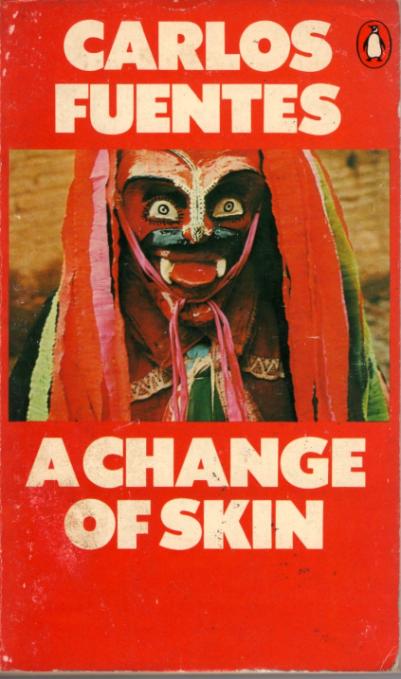
 "Carlos Fuentes is Mexico's leading contemporary writer and this while
probably his most ambitious novel, is also his most amorphous--lacking
any narrative action to give definition to the inchoate flux of ideas,
images, and endless memories of a past which is at time collective, at
times personal. The scene is Cholula, where Cortez once committed his
battue of the Indians, now a "living death." But then all of this is
death-directed ("To be dead waiting for eternity to put in its
appearance, which it refuses to do, to go on, dead, waiting.") and the
four characters assembled--over whom the "narrator,"--a sort of anarchic
hipster presides--are all landlocked: Javier, who had written one
little Foundation winning book; Elizabeth his wife who has been
destroying him for years by demanding too much; Franz, a Nazi, with the
survival guilt of the crematoria; and Isabel, a kicky chick ("All I'm
looking for is orgasms."). The novel has a certain degenerative energy,
but more often than not its fragmentation is close to anarchy which
makes it a quite often penitential reading experience."  "Fuentes, Mexico's leading novelist (author of Terra Nostra), invents
here a lyrical and philosophical tale about the times of Pancho Villa
and the Revolution in Mexico. The old gringo of the title is Ambrose
Bierce, the American journalist and writer who disappeared in the Mexican
dust. Bierce went to Mexico to die, Fuentes speculates, because he
could not bear to reflect on the pain and sacrifices his sanctimonious
moral rectitude had caused his family. He joins the troops of the young
revolutionary Tomas Arroyo, one of Villa's generals, who, as a "child of
misfortune" ("bastard" in the servant quarters) was trapped in the
hacienda and is now trapped by the revolution. Both the old gringo and
the young revolutionary fall in love with Harriet Winslow, an American
who had come to Mexico as teacher for the children on a hacienda which
no longer exists, having been burned by the revolutionaries. Fuentes
examines the borders between men and women, dreams and reality, Mexico
and the U.S. ("a scar" rather than a border). Doomed never to understand
each other, the two men inevitably die as they cross the frontier of
their differences: the old gringo killed by Arroyo (whom he provoked by
burning the papers of the history of Mexico) and Arroyo, in his turn,
shot by Villa for overstepping his boundaries of power. In this fine
short novel, Fuentes remains, as usual, wisely suspicious of both
American politics and those of the Revolution. The problem here is that
the author's posturing, his dramatic flourishes, never let us forget
that this is all fake, an invention, a meditation." 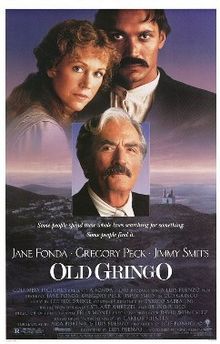 |
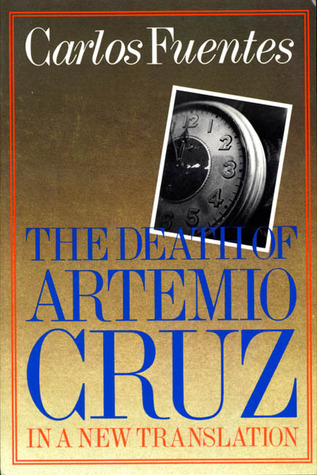
"Novel by Carlos Fuentes, published in Spanish as La Muerte de Artemio
Cruz in 1962. An imaginative portrait of an unscrupulous individual, the
story also serves as commentary on Mexican society, most notably on the
abuse of power--a theme that runs throughout Fuentes' work. As the
novel opens, Artemio Cruz, former revolutionary turned capitalist, lies
on his deathbed. He drifts in and out of consciousness, and when he is
conscious his mind wanders between past and present. The story reveals
that Cruz became rich through treachery, bribery, corruption, and
ruthlessness. As a young man he had been full of revolutionary ideals.
Acts committed as a means of self-preservation soon developed into a way
of life based on opportunism. A fully realized character, Cruz can also
be seen as a symbol of Mexico's quest for wealth at the expense of
moral values." - Amazon Review
 "One of the great
masterpieces of modern Latin American fiction, Terra Nostra is concerned
with nothing less than the history of Spain and of South America, with
the Indian Gods and with Christianity, with the birth, the passion, and
the death of civilizations. Fuentes skillfully blends a wide range of
literary forms, stories within stories, Mexican and Spanish myth, and
famous literary characters in this novel that is both a historical epic
and an apocalyptic vision of modern times. Terra Nostra is that most
ambitious and rare of creations a total work of art." 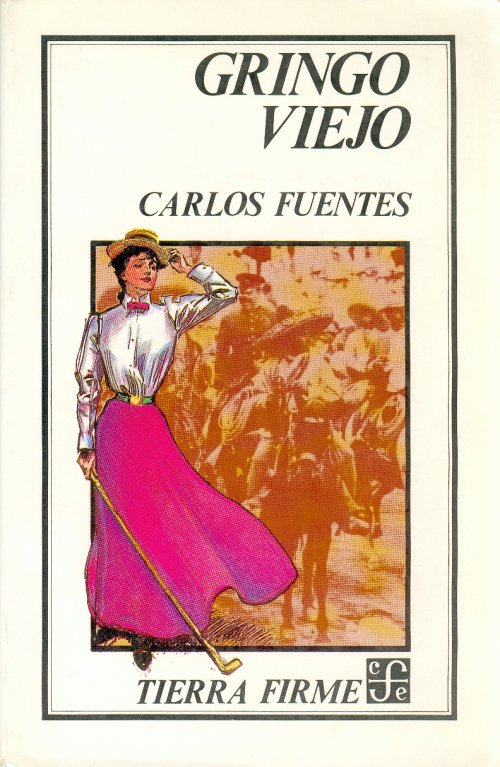 |
